2025-05-29
What is Co-Packaged Optics (CPO)?
A comprehensive introduction to Co-Packaged Optics technology, explaining why major AI infrastructure companies are adopting this architecture for next-generation data centers.
The Evolution of Optical Interconnects
For decades, data center networks relied on pluggable optical transceivers—separate modules that connected to switches via fiber cables. As bandwidth demands grew from 10G to 400G and beyond, the limitations of this approach became apparent: excessive power consumption, signal latency at the switch-to-optics interface, and density constraints.
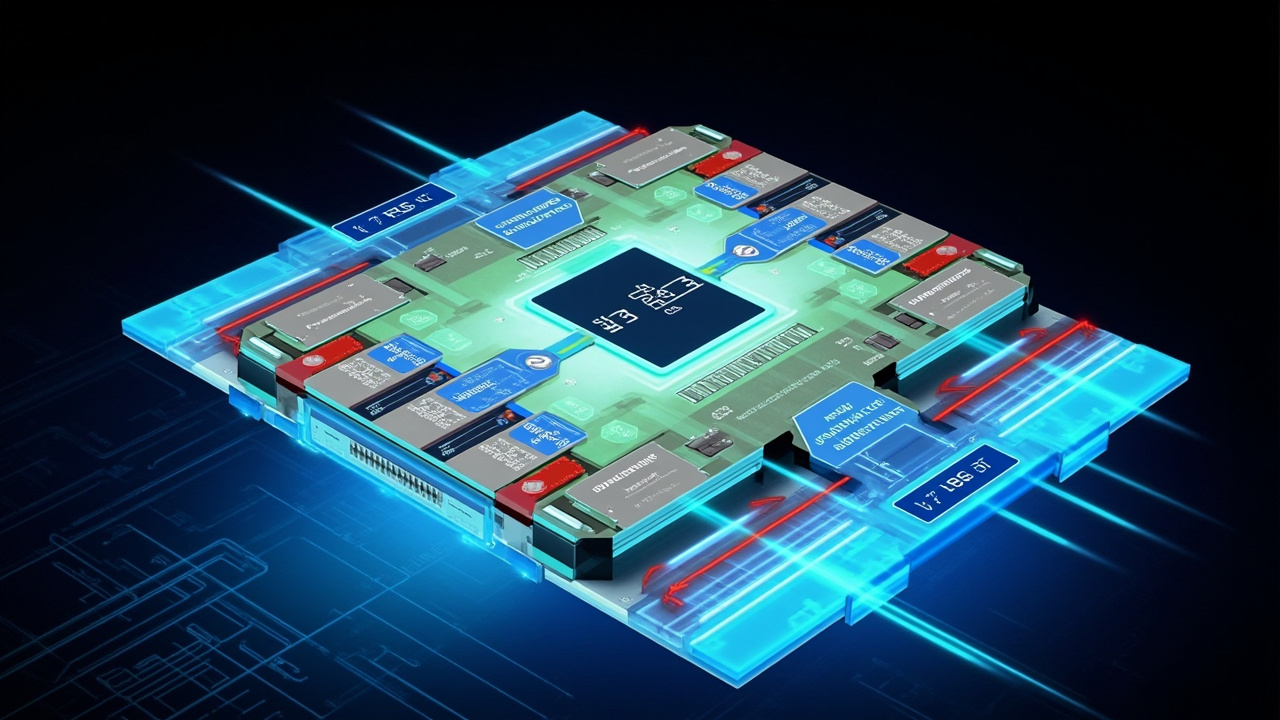
Co-Packaged Optics (CPO) represents a fundamental architectural shift: instead of placing optics as separate pluggable modules, the optical engines are integrated directly into the switch package, adjacent to the ASIC.
Why CPO Matters for AI Infrastructure
The Bandwidth Challenge
AI clusters require massive bandwidth between GPUs and switches. A modern AI cluster with 16,000 GPUs might need 12.8 Pbps of aggregate bandwidth—equivalent to connecting every person in Shanghai simultaneously at 1Mbps each.
Traditional pluggable optics struggle to meet this demand efficiently:
- Power: 400G pluggable modules consume 10-15W each
- Density: QSFP-DD form factor limits port density
- Latency: Longer electrical traces add nanoseconds of delay
How CPO Solves These Problems
| Challenge | Traditional Pluggable | CPO Approach |
|---|---|---|
| Power per 800G | ~15W | ~5W (60% reduction) |
| Electrical path | 30-50mm | <5mm |
| Port density | Limited by module size | Optimized for chip-scale |
| Thermal management | Separate heat sink | Diamond thermal spreading |
CPO Architecture: Key Components
The Switch ASIC
The central switch processor (e.g., Broadcom Tomahawk 6 at 102.4Tbps or NVIDIA Quantum-X at 115.2Tbps) performs packet switching at extraordinary speeds. These chips contain hundreds of SerDes lanes operating at 100G or 200G.
Optical Engines
Each optical engine contains:
PIC (Photonic Integrated Circuit)
- Silicon photonics chip with optical modulators, detectors, waveguides
- Typically 8-16 channels at 100G or 200G each
- Handles actual light transmission/reception
EIC (Electronic Integrated Circuit)
- CMOS driver and TIA circuitry
- Converts electrical signals from the switch ASIC to optical signals
- Usually fabricated at 65nm or more advanced nodes
The Thermal Challenge
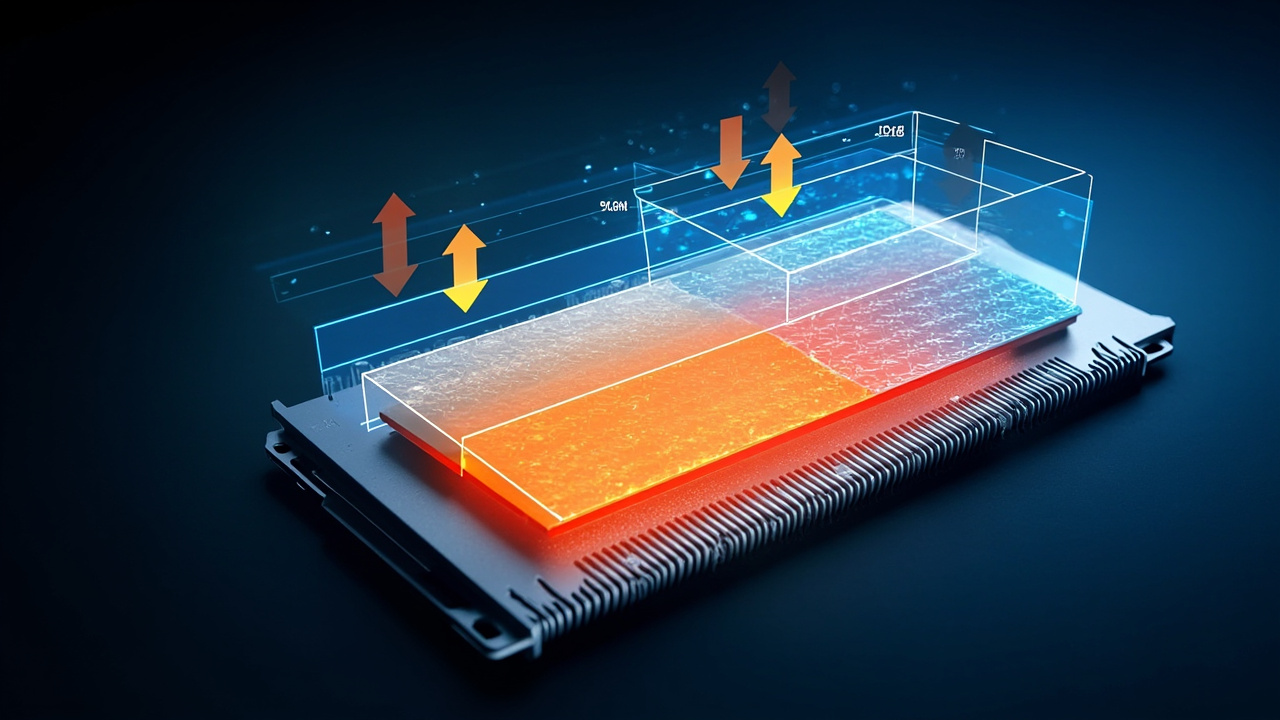
With optical engines consuming 50-100W and switch ASICs consuming 500W+ in the same package, thermal management becomes critical:
- Diamond substrate spreads heat across the package
- BDD (Boron-Doped Diamond) lids absorb EMI while conducting heat
- Micro-channel cooling may be integrated for extreme power densities
Industry Adoption Timeline
| Year | Milestone |
|---|---|
| 2019 | CPO concept demonstrated at OFC |
| 2022 | Broadcom announces Bailly 51.2T CPO switch |
| 2024 | First customer deliveries of CPO switches |
| 2025 | NVIDIA Spectrum-X Photonics announced at GTC |
| 2025 | Broadcom Tomahawk 6 (102.4T) with CPO support |
Key Players and Their Approaches
Broadcom
- Platform: Partnered with Google for custom CPO modules
- Optical Engine: Proprietary 6.4Tbps silicon photonics engines
- Integration: 8 optical engines per switch
NVIDIA
- Platform: TSMC COUPE (Compact Ultra-dense Photonics Engine)
- Technology: SoIC-X 3D stacking for PIC+EIC chiplets
- Products: Spectrum-X Photonics (Ethernet), Quantum-X Photonics (InfiniBand)
Chinese Ecosystem
- H3C: 51.2T CPO switch for domestic AI clusters
- 华为: Developing proprietary CPO solutions
- 华工正源: ELSFP modules compliant with OIF-ELSFP-02.0
ELSFP: The External Light Source Alternative
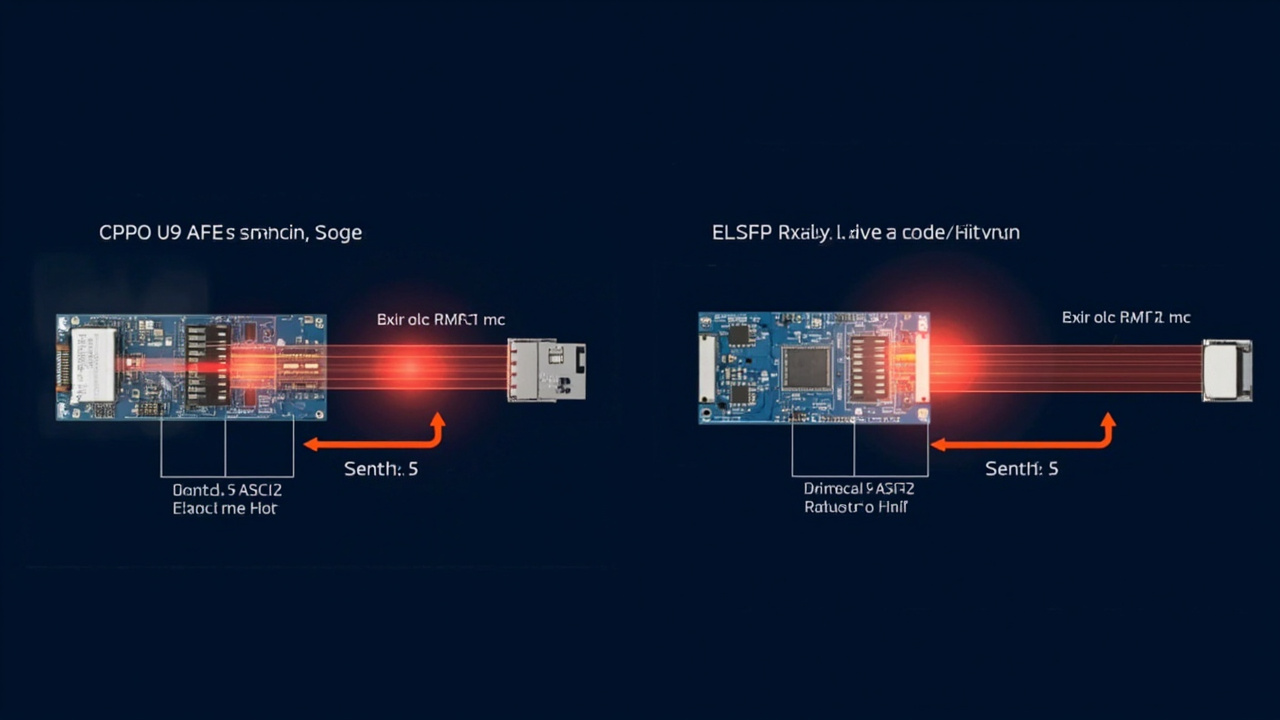
Not all optical integration follows the CPO approach. ELSFP (External Light Source Fixed Pointer) modules place lasers outside the switch package, connected via fiber arrays.
| Characteristic | CPO | ELSFP |
|---|---|---|
| Laser location | Inside package | External module |
| Serviceability | Limited (requires module replacement) | Field-replaceable lasers |
| Thermal coupling | Direct to diamond | Through fiber coupling |
| Typical use case | High-density AI clusters | Long-haul, metro networks |
What’s Next
CPO adoption is accelerating as:
- AI cluster scale drives demand for lower power and higher density
- 102.4T and 204.8T switches become mainstream
- Standardization (OIF, IEEE 802.3) enables multi-vendor interoperability
- Manufacturing yields improve for silicon photonics
Related Terms
- PIC: Photonic Integrated Circuit - the silicon photonics chip with optical components
- EIC: Electronic Integrated Circuit - the CMOS driver/TIA circuitry
- ELSFP: External Light Source Fixed Pointer - separate laser module format
- SerDes: Serializer/Deserializer - high-speed interface between ASIC and optics
- COUPE: TSMC’s Compact Ultra-dense Photonics Engine platform
Learn More
Explore related concepts and products